- Deep Robotics plans to raise $368 million in the offering.
- The company focuses mainly on the enterprise market, contrasting sharply with its rival's consumer-oriented approach.
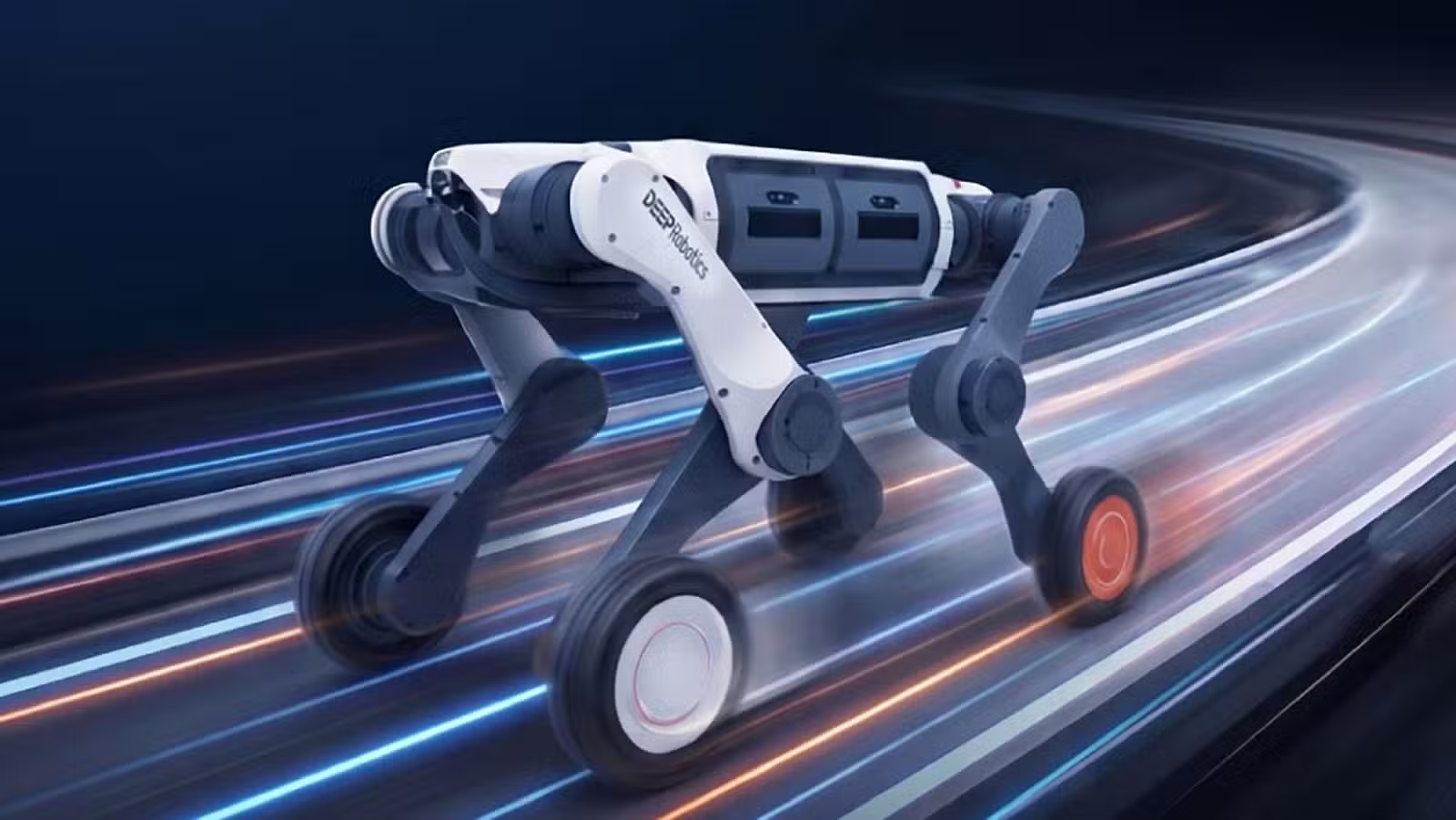
Chinese embodied AI robot developer Hangzhou Deep Robotics has officially filed for an A-share listing, becoming the latest to do so after Unitree.
The company plans to launch an initial public offering on the Shanghai Stock Exchange's STAR Market, aiming to raise 2.5 billion yuan ($368 million).
The proceeds will be allocated to the research and development of embodied AI algorithmic models and the construction of a robot manufacturing base, according to a prospectus published on Monday.
In a robotics industry characterized by cash-burning startups, Deep Robotics has demonstrated a rare financial turnaround. The company turned profitable for the first time in 2025, achieving a net income of 28.68 million yuan.
Meanwhile, its revenue also showed explosive growth.
In 2025, Deep Robotics' total revenue surged 227% to 337 million yuan. This was largely driven by its quadruped robot products entering a phase of large-scale deployment.
From 2023 to 2025, the company's annual robot sales volume climbed significantly from 529 units to 3,936 units.
At the same time, its comprehensive gross margin improved significantly from 33.48% in the early stage to 52.83%, according to the prospectus.
Unlike its rival Unitree, which primarily targets the consumer market, Deep Robotics focuses its core business on enterprise-level applications. Nearly 80% of its revenue comes from complex industrial scenarios.
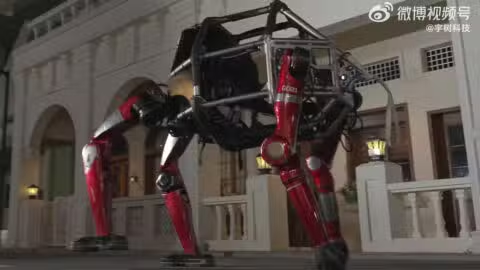
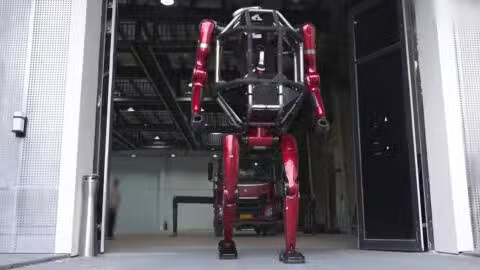
The company's Jueying series of quadruped robots are widely used in harsh outdoor environments such as power grid inspections, emergency firefighting, and police security. This high reliability as a professional tool has brought it a considerable premium in these scenarios.
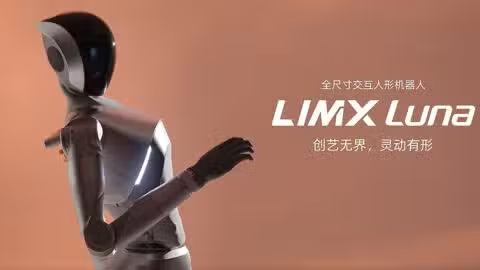
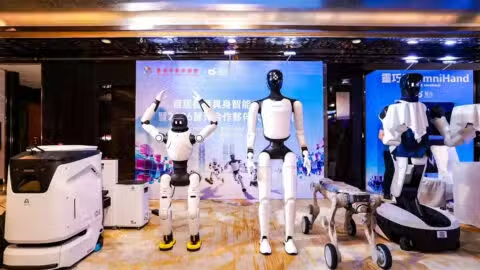
In addition to quadruped and wheeled-legged robots, Deep Robotics is also actively expanding into the humanoid robot sector.
The company launched its first general-purpose humanoid robot, DR01, in 2024, and released its second-generation product, DR02, in 2025.
The number of humanoid and quadruped robot startups in China currently exceeds 200. As industry competition intensifies, the capital market is closely watching whether these companies can truly form a sustainable industrial revenue loop.
Despite having crossed the profitability threshold, Deep Robotics still issued a warning in its prospectus.
Due to rapid technological iteration, the company must continue to increase its research and development investments, which could lead to fluctuations in profitability in the short term.
Unitree filed its application for a STAR Market listing in March, which is currently still under review.

($1 = 6.7921 yuan)