- The new flagship model triggers explosive usage growth, yet domestic chip cluster expansion struggles to meet demand.
- The move follows the open-source release of GLM-5 on February 12, presenting a new challenge for this Hong Kong-listed AI company.
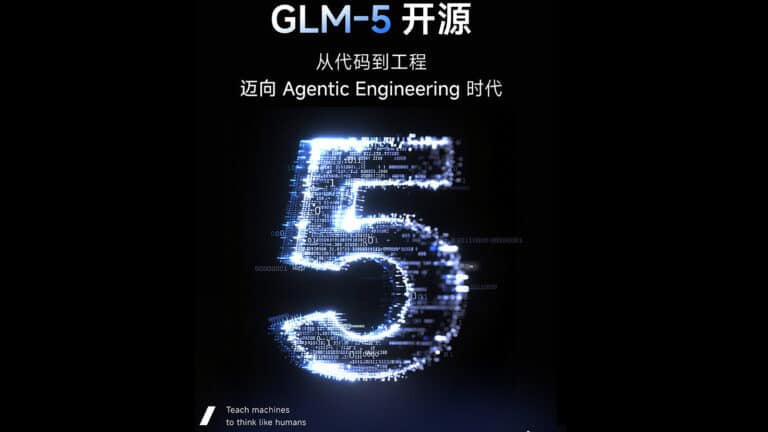
Chinese AI startup Zhipu AI today announced the launch of its computing power partner recruitment initiative, extending an olive branch to chip manufacturers, computing power providers, and inference service providers to address the explosive growth in computing demand.
The company said that recent global demand for GLM-5 has surged, with concurrent access exceeding existing capacity limits, leading to service queues, response delays, and performance stuttering.
This marks the latest challenge faced by the Hong Kong-listed AI company since the open-source release of GLM-5 on February 12.
Within hours of the model's release, platform traffic exploded, forcing the team to coordinate computing resources for rapid scaling.
Despite multiple expansions of domestic chip clusters and limited sales of the GLM Coding Plan subscription, Zhihu has been unable to fully resolve the supply shortage.
The mysterious model "Pony Alpha," which gained popularity on the model aggregation platform OpenRouter, has been confirmed to be GLM-5. This model ranks fourth globally and first among open-source models on the authoritative Artificial Analysis benchmark. It achieved the best performance among open-source models in both programming and agent capability tests.
GLM-5 demonstrates significant technical advancements. Its parameter scale expands from 355B (32B active) to 744B (40B active), while pre-training data increases from 23T to 28.5T. Its performance in real-world programming scenarios now rivals Anthropic's Claude Opus 4.5.
The model is deeply optimized for domestic computing platforms like Huawei Ascend, Cambricon, and Moore Threads, establishing itself as a key benchmark for China's autonomous and controllable AI ecosystem.
Zhipu's newly launched computing power partnership initiative encompasses three key directions: opening core technical interfaces to chip manufacturers for joint optimization of GLM-5's underlying architecture; collaborating with enterprises possessing large-scale computing pools to build high-concurrency, low-latency inference networks; and exploring other forms of computing power cooperation.
The initiative highlights a core challenge in AI large model commercialization: technological leadership drives user growth, yet computational costs may create a paradox where greater scale leads to greater losses.
Zhipu's revenue surged 325% year-on-year to RMB 191 million in the first half of 2025. However, sales and marketing expenses reached RMB 209 million, while R&D expenditures hit RMB 1.595 billion — both significantly exceeding revenue scale.
Notably, amid surging demand, Zhipu raised its GLM Coding Plan pricing by 30% to 60% on February 12, while API call rates increased by 67% to 100%.
This breaks the industry's price war convention, revealing users' inelastic demand for premium models in high-value scenarios.
The launch of GLM-5 coincides with China's AI industry's Spring Festival season for new model releases. ByteDance unveiled its video generation model Seedance 2.0, Kuaishou released Kling 3.0, and MiniMax launched its M2.5 model.
This wave of domestic large model releases is viewed by the industry as a crucial window for China's AI sector to demonstrate its technological prowess to the global market.