- Agibot has released Genie Envisioner 2.0, upgrading its world model into an interactive physical simulator to reduce real-world training and trial-and-error costs for robots.
- The launch is a core component of Agibot's "AI Launch Week".
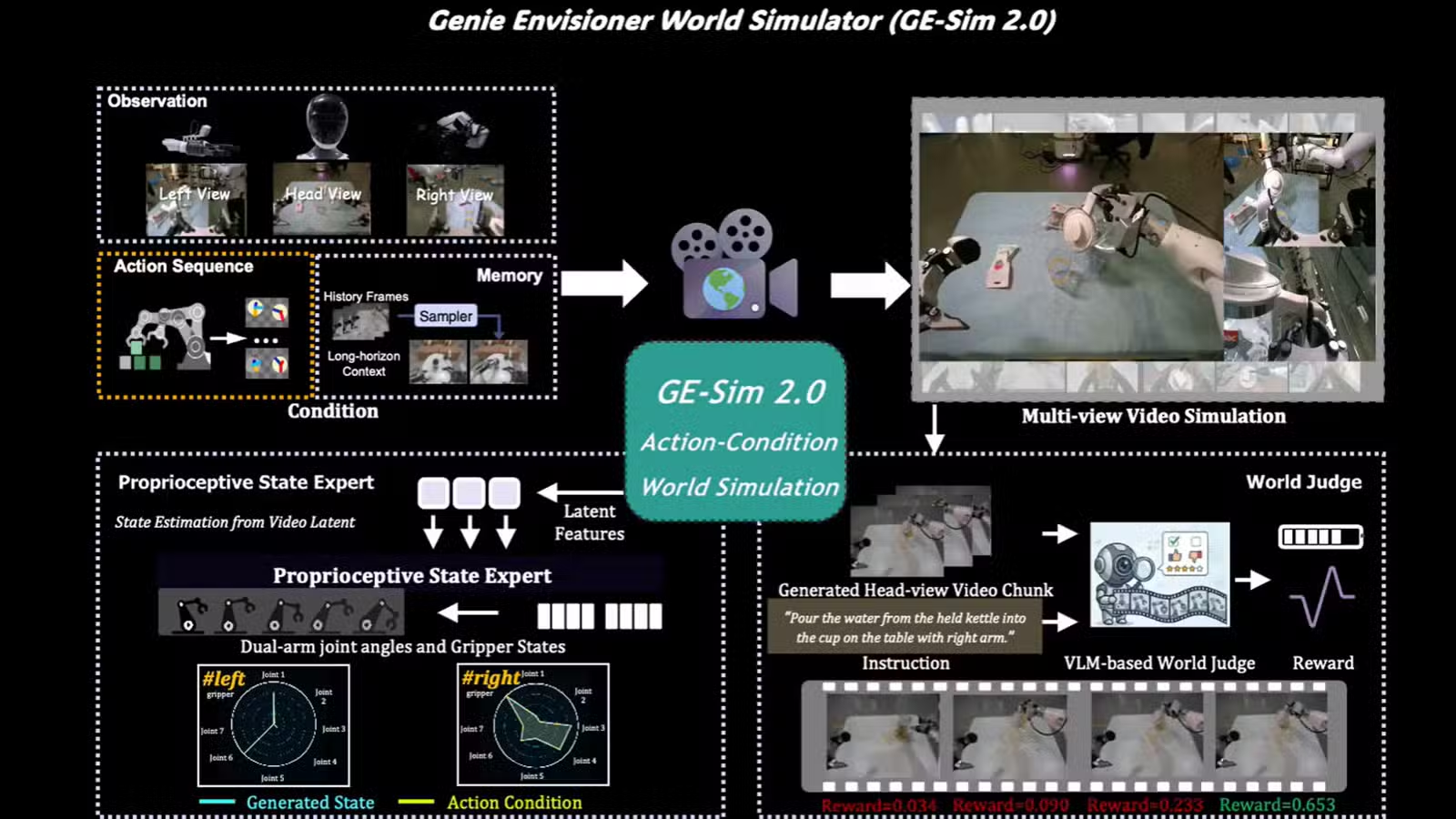
Agibot has launched the Genie Envisioner 2.0 system, marking a new step for the Chinese humanoid robot startup in the field of embodied intelligence.
The system enables robots to learn autonomously within a "model world," lowering the costs of trial and error in real environments and providing the infrastructure for the large-scale deployment of general-purpose robots, according to a company announcement on Friday.
The release is the outcome of the fourth day of Agibot's "AI Launch Week." From April 7 to 14, the company plans to unveil a core technological breakthrough in physical AI every workday.
Agibot saw its 10,000th humanoid robot roll off the assembly line last week. This mass-production speed exceeded market expectations, putting it ahead of rival Tesla in the pace of commercialization.
The newly introduced Genie Envisioner 2.0 is an interactive, decision-making operational world, achieving a leap for world models from "describing the world" to "becoming the world itself."
The system can respond to robotic action signals, generate environmental changes, and support minute-level, long-sequence stable simulations, the company said.
Notably, the model features text-based self-evaluation capabilities for the first time. Through a built-in general reward model, the system can complete a closed loop of reinforcement learning within the model world without human intervention.
With improved inference efficiency, the system is now operating in near real-time, transforming from an offline tool into a real-time interactive environment, the company said.
Following the company's release of the GO-2 embodied foundation model on Thursday, Agibot is attempting to break through the industry bottlenecks of patched-together technologies and disconnected commercial applications.
The launch of Agibot's new system aims to propel robots into a new stage of autonomous exploration.