- Alibaba open-sourced four compact AI models in its Qwen3.5 series, earning public praise from Musk for their impressive performance.
- These lightweight models will pave the way for Alibaba's upcoming hardware ecosystem, which includes AI smart glasses and rings.
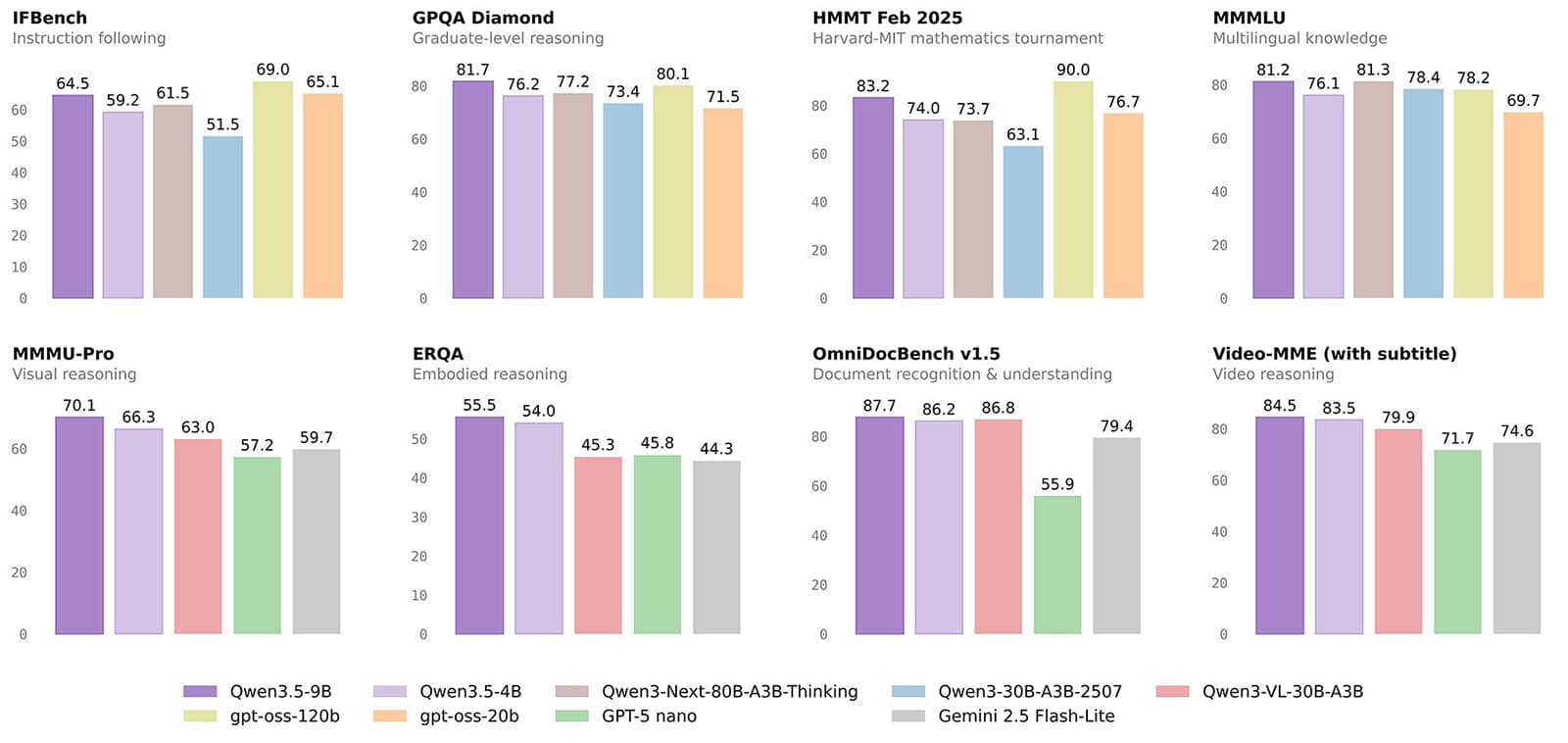
Alibaba's newly open-sourced, small-sized artificial intelligence (AI) models have drawn public praise from Tesla CEO Elon Musk, highlighting the Chinese tech giant's progress in optimizing AI technology.
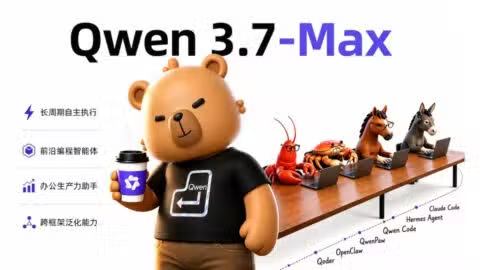
Alibaba's Qwen team announced on Monday the open-sourcing of four compact models in its Qwen3.5 series, including the 0.8B, 2B, 4B, and 9B versions — tailored specifically for resource-constrained devices and lightweight applications.
Musk later replied to a Qwen post on X, the social media platform he owns, praising the lightweight models for displaying "impressive intelligence density."
The newly released models, with parameters ranging from 800 million to 9 billion, are engineered for extreme resource-constrained edge devices and high-performance lightweight applications.
The smallest of these models features a compact size and ultra-fast inference speeds, making it ideal for low-latency, real-time interactive scenarios on mobile devices and Internet of Things (IoT) terminals.
With this release, the Qwen3.5 family has now open-sourced its large-scale Qwen3.5-397B-A17B model, three medium-sized models including Qwen3.5-122-A10B, Qwen3.5-35B-A3B, and Qwen3.5-27B, alongside the four latest compact models Qwen3.5-9B/4B/2B/0.8B.
This technological breakthrough in underlying software architecture is closely tied to Alibaba's impending offensive in consumer AI hardware.
The company has unveiled its first Qwen AI glasses at the ongoing 2026 Mobile World Congress and officially opened pre-orders to the Chinese public on March 2.
The Qwen AI glasses, with a subsidized starting price of 1,997 yuan ($290), will officially go on sale in China on March 8.
Beyond smart glasses, Alibaba's 2026 hardware lineup also includes devices such as AI earphones and smart rings.
These wearable devices, powered by the Qwen large models, will be sold in the global market, aiming to seize the core gateway for next-generation AI interaction beyond smartphones.
Alibaba previously integrated core local lifestyle services, such as food delivery and ride-hailing, into the Qwen App, enabling convenient ordering with just a single sentence.
These convenient, voice-command-based features will be seamlessly migrated to the new terminal devices, thereby extending Alibaba's massive service ecosystem from mobile screens into the physical world.
Currently, global tech giants are rushing into the consumer AI hardware track, with companies like Meta and OpenAI actively preparing their own smart wearable devices.
($1 = 6.8848 yuan)