- MiniMax officially open-sourced its self-evolving M2.7 model, securing deep integration support from leading global chipmakers and inference platforms.
- The move follows a surge in demand after the model's launch, with its outstanding performance in core benchmarks rivaling top global competitors, signaling an intensifying AI race.
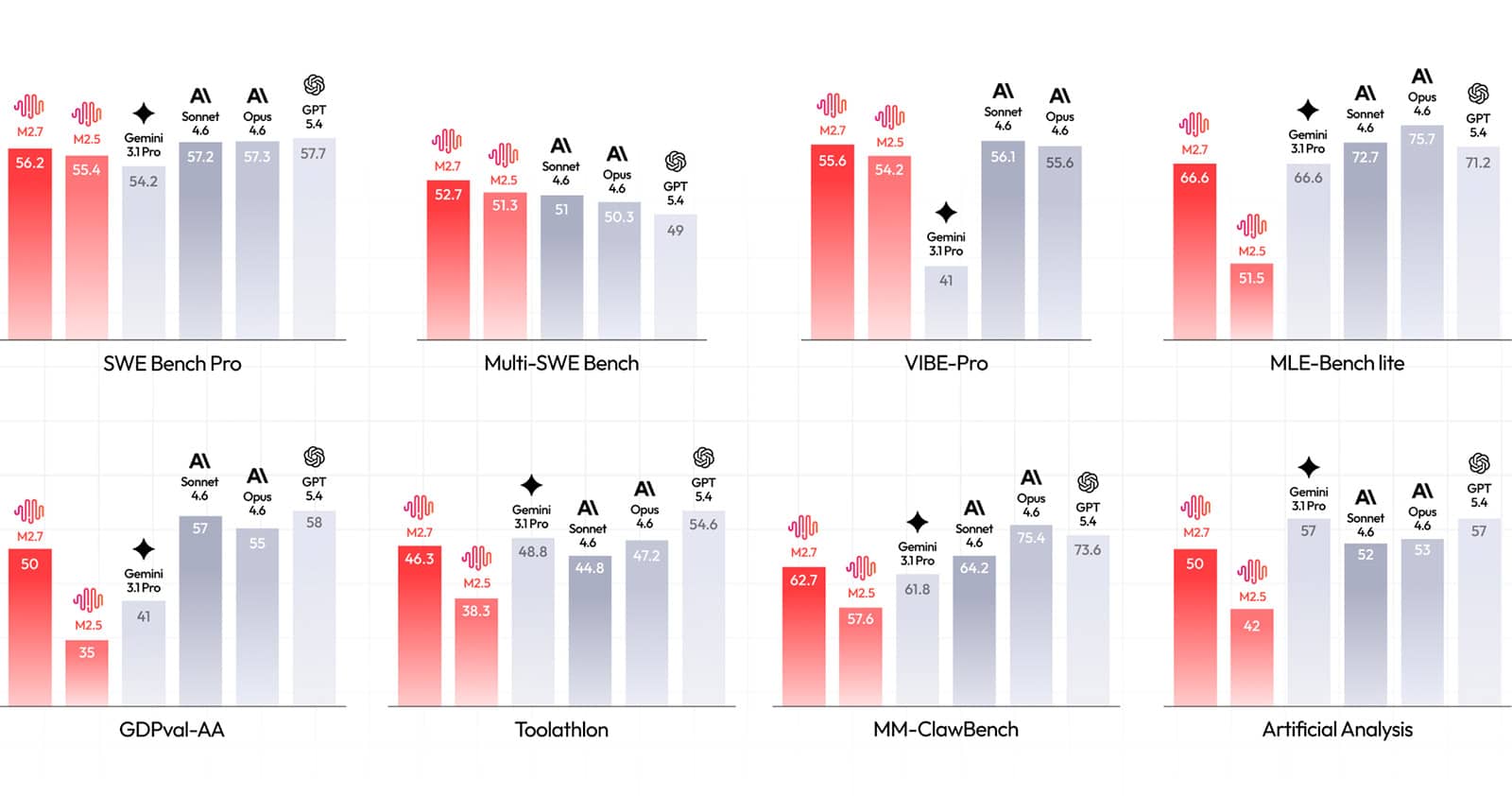
Chinese AI (artificial intelligence) startup MiniMax announced on Sunday the official open-sourcing of its M2.7 model, a move aimed at joining hands with global software and hardware partners to accelerate the development of the AI ecosystem.
The model is MiniMax's first AI model to deeply participate in its own iterative optimization, scoring 56.22% on the SWE-Pro benchmark and approaching the highest level of top global models, according to the company.
M2.7 completed extensive model integration and inference adaptation on its first day of open-sourcing. Its partners include domestic and overseas manufacturers such as Huawei Ascend, Chinese GPU maker Moore Threads, Nvidia, and Together AI.
The model can independently build complex agent frameworks to complete highly complex productivity tasks. It has also demonstrated strong capabilities in end-to-end project delivery and complex system understanding, the company said.
Equipped with self-evolving capabilities, M2.7 can automatically collect feedback and continuously optimize its own architecture. When optimizing programming skills, it can autonomously run over 100 loops, achieving a 30% performance improvement.
In addition, the model is equipped with the new OpenRoom interaction system, expanding AI interaction from plain text to a visual interface that supports real-time scene feedback, the company stated.
The M2.7 model was initially launched in mid-March and triggered a surge in traffic, prompting MiniMax to implement dynamic rate limiting during peak hours to ensure service stability.
The open-sourcing comes as the competition among Chinese large AI models continues to heat up. Rival Zhipu also open-sourced its flagship GLM-5.1 model last week, marking a new journey for the industry's technology and commercialization.

