- Tencent is developing a standalone mobile application for its QClaw AI agent, aiming to complement its existing desktop capabilities.
- The move intensifies fierce competition among Chinese tech giants in the AI agent sector, even as regulators issue warnings over data privacy risks.
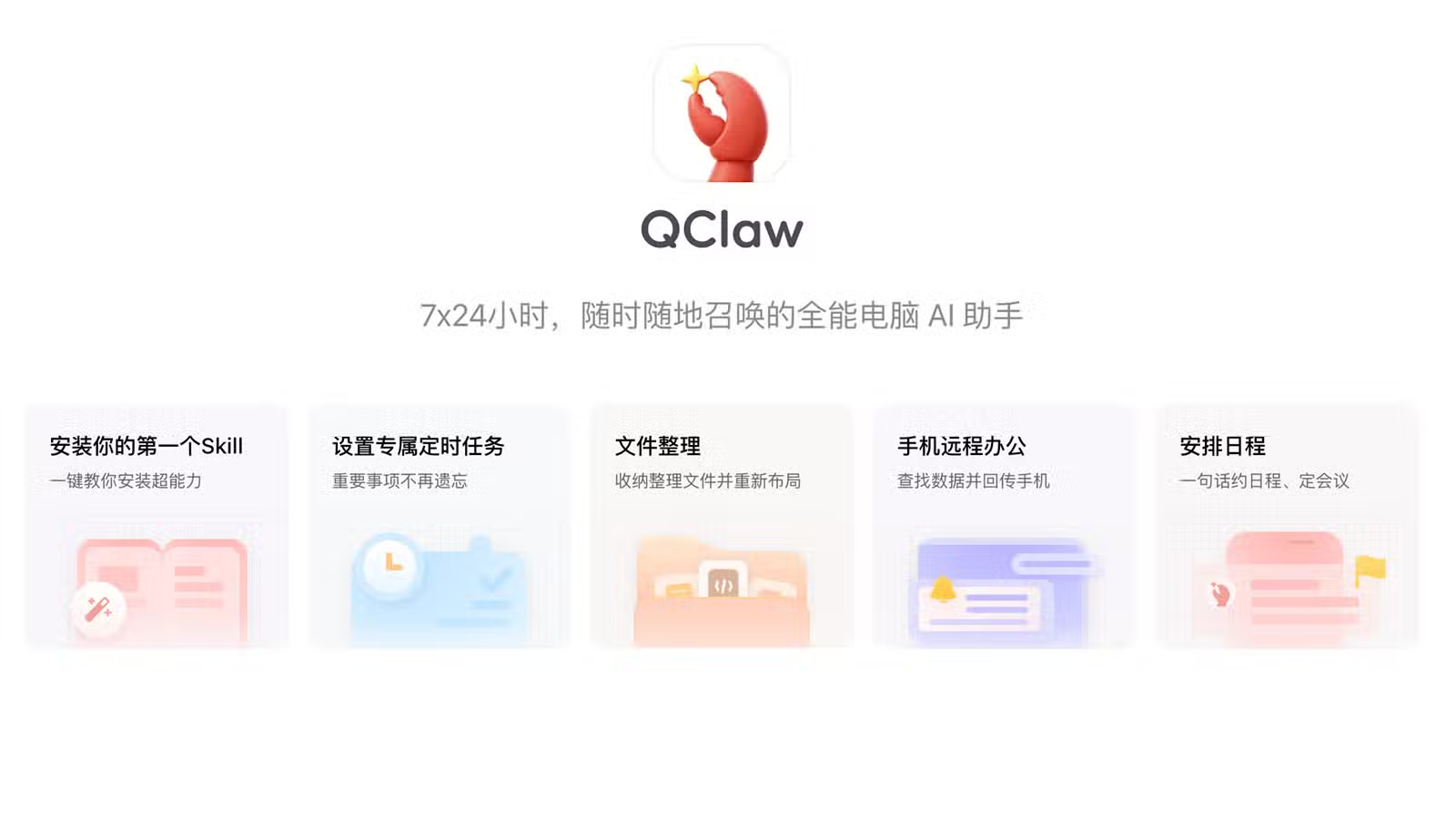
Tencent is developing a standalone mobile application for its QClaw business, according to a Thursday report by local media outlet Dujia.
The app is expected to launch soon, rounding out Tencent's local AI agent ecosystem on mobile devices, the report noted.
The application is spearheaded by the Tencent PC Manager team and built upon the OpenClaw open-source framework.
As a lightweight, privacy-first personal AI productivity tool, it will serve as a mobile complement to the company's existing desktop capabilities.
Following standard practice, QClaw will enable multi-device synergy once the standalone app goes live, lowering the barrier to entry for everyday users adopting AI agents.
Additionally, a Tencent mini-program dubbed LightClaw has already been launched.
Tencent initiated internal testing of QClaw on March 10, just one day after rolling out WorkBuddy. The dual-product strategy targets distinctly different user demands in the rapidly growing desktop AI market.
Tencent Cloud announced a major version update for QClaw on March 18, upgrading its WeChat entry point to a mini-program to support uploading and receiving files from desktop computers.
A newly launched "Inspiration Square" features pre-configured tasks and skills, allowing users to execute them with a single click without writing prompts. It is touted as an AI agent that anyone can easily use.
The AI agent sector is currently experiencing an intensive wave of development, colloquially referred to within the industry as "raising lobster."
Other top-tier internet giants, including Alibaba, ByteDance, and Baidu, have launched their own competing products.
AI unicorns, including Kimi, Zhipu AI, and MiniMax, are also promoting their respective Claw-series products. This aggressive ecosystem expansion reflects the fierce competition currently unfolding among Chinese tech firms.
Meanwhile, Chinese regulatory authorities have publicly issued risk warnings, pointing out that such high-privilege AI agents pose security risks regarding data privacy leaks.
Despite regulatory warnings, major tech companies continue to double down on their investments. The core rationale is that AI agents are viewed as the crucial interactive portal for the next generation of AI applications, dictating future dominance in the industry.

