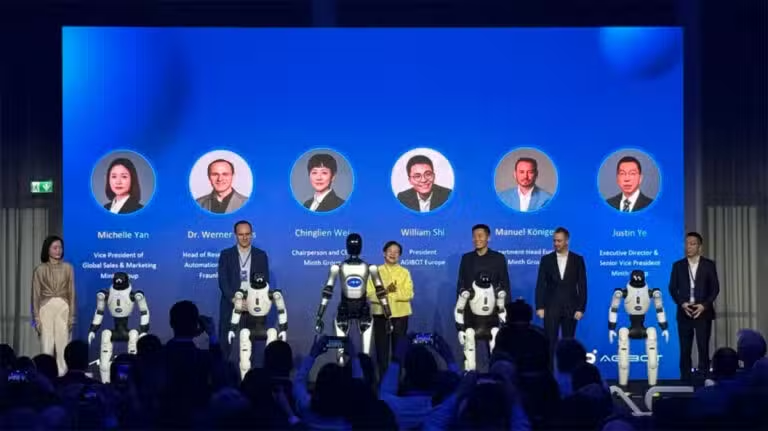
- In 2025, China's humanoid robot industry had surpassed 140 companies, with over 330 humanoid robot products released throughout the year.
- Faced with rapidly expanding market scale and hundreds of emerging new products, Chinese authorities are now establishing industry regulations.
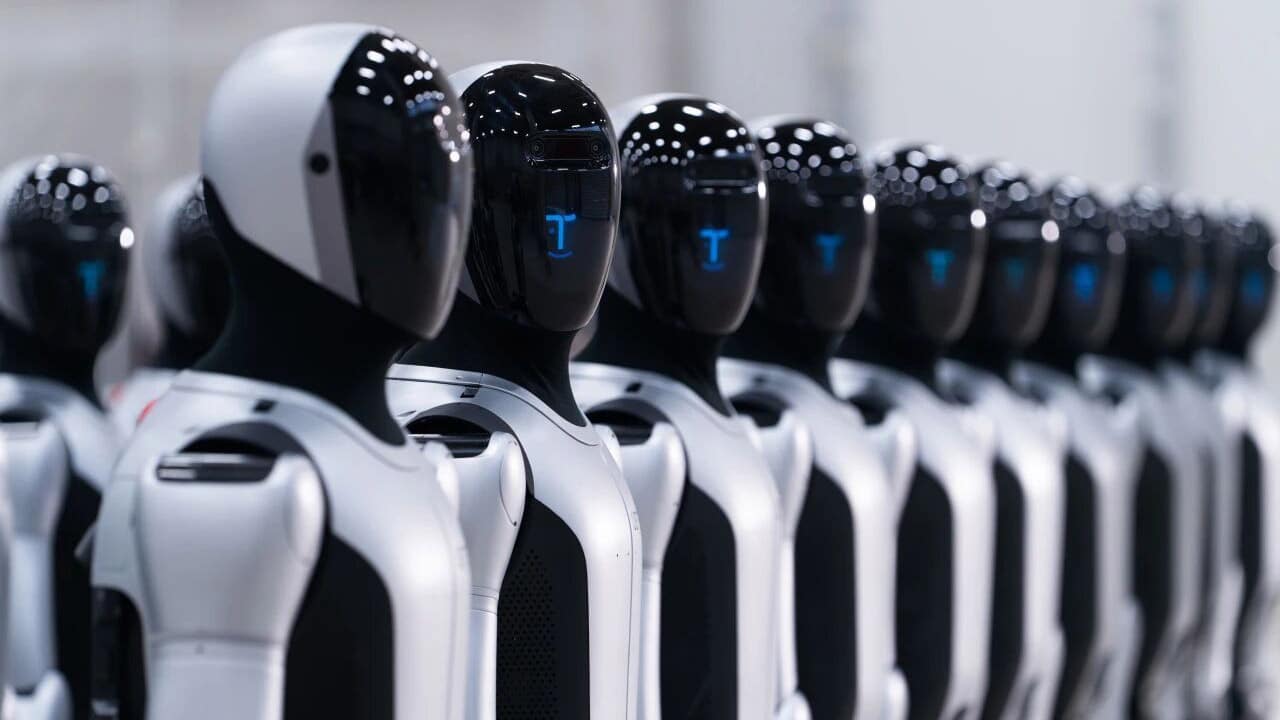
China's humanoid robot sector is experiencing unprecedented explosive growth.
In 2025, China's humanoid robot industry exceeded 140 companies, with over 330 humanoid robot products released throughout the year, according to a Sunday report by state broadcaster CCTV.
This highlights the fervent pursuit of capital and tech companies in this field. Industry production scale is accelerating toward the ten-thousand-unit level, signaling the sector's transition from conceptual incubation to early-stage mass production.
Faced with rapidly expanding market size and hundreds of emerging new products, Chinese authorities are establishing industry regulations.
On February 28, China officially released its first national standard system for humanoid robots and embodied intelligence.
This standard system covers six core areas that include foundational commonalities, brain-inspired computing, and safety ethics. The move aims to provide top-level design for the entire industrial chain, guiding this increasingly crowded market toward standardized development.
Despite the constant stream of new products, the path to large-scale commercialization remains fraught with challenges.
Experts from China's Ministry of Industry and Information Technology (MIIT) said that insufficient generalization capabilities of AI models and reliance on imported core components remain major bottlenecks constraining the industry.
Amidst a landscape where over a hundred companies operate independently, fragmented application scenarios and high manufacturing costs make practical implementation difficult.
Addressing data scarcity and achieving interoperability between platforms has become an urgent task, as noted by the CCTV report.
Despite numerous technical and market hurdles, the industry remains optimistic about the commercial prospects of this sector. Humanoid robots are widely viewed as the next-generation super terminal following smartphones and EVs.
Amid fierce competition among over 300 new products, certain niche commercial applications are beginning to gain traction. Cultural and entertainment services, emotional companionship, and industrial services are poised to become core growth drivers in the medium to short term.