- LandSpace plans to conduct another first-stage recovery test for its Zhuque-3 rocket in the second quarter of this year, aiming to achieve its first reusable flight in the fourth quarter.
- LandSpace's ultimate goal is to reduce the launch cost of the Zhuque-3 to below RMB 20,000 per kilogram.
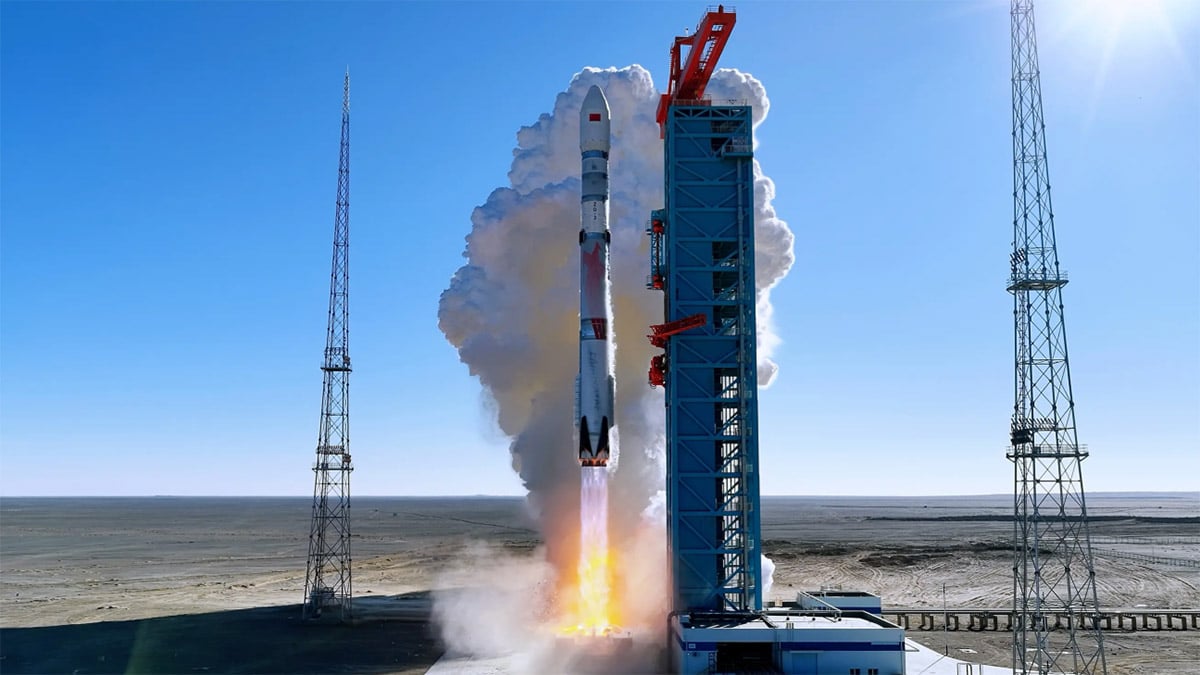
China's leading commercial space company LandSpace is accelerating its reusable rocket program to achieve its ultimate goal of reducing launch costs to RMB 20,000 ($2,905) per kilogram.
The company plans to conduct another first-stage recovery test for its large-scale liquid oxygen/methane carrier rocket, Zhuque-3, in the second quarter of this year, and aims to achieve its first recovery and reuse flight in the fourth quarter, according to a WeChat post released on Wednesday.
This tight schedule highlights the fierce competition among China's private space companies vying for market share in low-cost launches.
LandSpace management previously said its ultimate goal is to reduce Zhuque-3 launch costs below RMB 20,000 per kilogram.
The company estimates that after five reuses, per-flight costs will decrease by about 45% compared to the maiden flight. If reused 20 times, launch costs will essentially drop to marginal costs covering only second-stage manufacturing and first-stage maintenance.
LandSpace's return to the test site comes just months after its initial attempt.
In December 2025, the Zhuque-3 conducted China's first orbital-level launch and recovery verification for a reusable rocket.
Although the rocket successfully delivered its payload to the intended orbit, the first stage encountered anomalies during the landing phase and failed to achieve a soft landing. However, the flight data collected during this mission provided critical support for optimizing the landing process.
Additionally, the rocket's second stage underwent a controlled reentry and ablative disintegration over the South Pacific Ocean as planned in late January this year, complying with increasingly stringent international space debris mitigation regulations.
While tackling technological challenges, LandSpace is also actively pursuing commercial and capital strategies.
Earlier this month, the company represented China's commercial space sector at the United Nations Committee on the Peaceful Uses of Outer Space (COPUOS) Scientific and Technical Subcommittee meeting in Vienna, showcasing its engineering practices in sustainable space development and core technologies to the international community.
Currently, LandSpace is in a critical phase of capacity expansion and capital operations. Its rocket assembly and smart manufacturing base in Wuxi is scheduled to commence operations this year.
As the world's first company to achieve orbital deployment of a liquid oxygen-methane rocket, LandSpace — which has secured billions of yuan in cumulative financing — is now accelerating its preparations for listing on China's Nasdaq-style sci-tech innovation board, also known as the STAR Market.
($1 = RMB 6.8840)